<?xml version="1.0" encoding="utf-8"?><feed xmlns="http://www.w3.org/2005/Atom" ><generator uri="https://jekyllrb.com/" version="3.10.0">Jekyll</generator><link href="https://hmkinsle.github.io/feed.xml" rel="self" type="application/atom+xml" /><link href="https://hmkinsle.github.io/" rel="alternate" type="text/html" /><updated>2026-05-05T19:24:45+00:00</updated><id>https://hmkinsle.github.io/feed.xml</id><title type="html">Haley M. Kinsler, PhD Student</title><author><name>Haley M. Kinsler</name></author><entry><title type="html">On Flock “Safety” cameras and critical infrastructure studies</title><link href="https://hmkinsle.github.io/posts/2026/05/blog-post-2/" rel="alternate" type="text/html" title="On Flock “Safety” cameras and critical infrastructure studies" /><published>2026-05-05T00:00:00+00:00</published><updated>2026-05-05T00:00:00+00:00</updated><id>https://hmkinsle.github.io/posts/2026/05/blog-post-2</id><content type="html" xml:base="https://hmkinsle.github.io/posts/2026/05/blog-post-2/"><![CDATA[<p>Today is my first time meeting with all of my committee members simultaneously, which means we will be looking through the drafts I have prepared for my reading lists in preparation of qualifying exams this fall. With that, I have been reflecting most intently on the last of my three lists, which I describe in my rationale as “[taking] up scholarship in critical infrastructure studies… I draw here  on scholarship centered around critical serve as the infrastructures for AI technologies, thus taking AI as an object for critical study.”</p>

<p>The problem of such a topic, of course, is that it is difficult to find the boundaries for the actual object I claim to be focusing on, as “Artificial intelligence” encompasses a wide range of technologies, from the simplest of large language models, to the increasingly complex algorithms that <a href="https://natlawreview.com/article/government-mandated-kill-switch-coming-vehicle-near-you">legislators in the United States are considering</a> granting the autonomy to shut off driver’s vehicles if they are flagged by a behavioral detection model for fatigue or possible inebriation. The question of infrastructure and AI becomes even more complex when we consider that AI technologies are both produced and made possible by various infrastructural systems and mechanisms, as well as integrated into the infrastructure we encounter on a daily basis.</p>

<p>In recent years, the <a href="https://g2c.owenleonard.dev/">infrastructural basis of AI</a> has been a primary concern for researchers in the humanities, whether due to its environmental impacts and stress on the data centers that are used to train AI models, or the over-extraction of minerals used for computing hardware components, or the scraping of massive amounts of data without consumers’ knowledge or consent.</p>

<p>At the same time, the rapid deployment of AI technologies as part of the operation of infrastructure illustrates the importance of scholarship that not only critically interrogates the politics of design in shaping the outcomes of AI technologies, but also in the risks they posed when given agency in operating infrastructural technologies, bringing me to my discussion of Flock Safety.</p>

<p><a href="https://www.flocksafety.com/">Flock Safety</a> is a company that frequently partners with municipalities and law enforcement agencies across the United States to provide surveillance cameras, the most prominent of which are their automatic license plate reader (ALPR) cameras. Such cameras are positioned frequently in parking lots and intersections, logging the license plates of all of the vehicles that pass by them. They are cited by municipal leaders and law enforcement alike as a safety measure, one that they state is intended to aid in identifying suspects after a crime has been committed, rather than a surveillance tool.</p>

<p>These cameras have not been without pushback, however. <a href="https://www.aclum.org/campaigns-initiatives/get-the-flock-out-resource-guide/">The ACLU has cited the data collected by Flock Safety as a privacy concern</a> for everday residents who would not suspect that their movement is being tracked otherwise. Such concerns have risen to the level of litigation, as is the case for a <a href="https://www.nbcnews.com/tech/tech-news/san-jose-drivers-sue-city-police-flock-cameras-rcna331750">class action lawsuit filed against San Jose</a>, California’s municipality and police department over concerns that the tracking of driver’s movement constitutes an unreasonable search in violation of the Constitution’s Fourth Amendment.</p>

<p>As was the case for how I came across mesh networks as a form of off-grid communication, I learned about Flock Safety from Youtube content creator, Benn Jordan, who has reported dozens of <a href="https://www.youtube.com/watch?v=uB0gr7Fh6lY">security vulnerabilities</a> that Flock Safety has yet to resolve. Most notably, Jordan has illustrated the lack of protective measures to prevent unauthorized access to these camera security feeds, and in <a href="https://www.youtube.com/watch?v=vU1-uiUlHTo">gaining access to several of these unsecured feeds</a> in an audit of Flock’s precautions, he was able to view footage of people jogging on greenways, playing in local parks, and purchasing items from local stores.</p>

<p>What started as a more straightforward concern about license plate recognition and movement tracking thus becomes a much more complex issue around the integration of an AI-powered infrastructure of surveillance that is rapidly being deployed in public space across the United States. As part of the growing concern about the lack of transparency from Flock Safety on these data leaks and security vulnerabilities, <a href="https://deflock.org/">DeFlock</a> was launched as a community mapping project for identifying and logging the location of these surveillance communities. The site additionally features a mapping tool that allows users to generate directions that allow them to specifically avoid Flock Safety cameras when traveling from place to place. Similarly, a firmware from ColonelPanicHacks called <a href="https://github.com/colonelpanichacks/flock-you">Flock You</a> utilizes a Seeed Studio XIAO ESP32S3 board to buzz and log device locations whenever in the vicinity of a Flock Safety camera’s signal.</p>

<p>I recently began making a Flock You device of my own, with a buzzer and LED circuit to help me identify cameras in my own area. When first prototyping my device, I searched the DeFlock map to identify the cameras closest to me, and it was then that I first realized how pervasive the privacy risks posed by these cameras truly are. About a dozen are placed near my workplace, and unbeknownest to me, have had the capacity to track my movement in and out of my office, to the coffee shops and restaurants I frequent during lunch breaks, and to greenways that I rely on to bike throughout my city.</p>

<p>It is precisely this realization that led me to consider what it means to look at AI technologies when they become infrastructure, invisible and out of mind for the average person. At a time when agentic AI is quickly requiring scholars to again relearn what it means to critically interrogate these technologies, I find myself wondering how we account for facial recognition, license plate recognition, and motion sensing technologies that might be eventually have the autonomy to act in a context where people’s private information is being compiled on a massive level. Might we approach a stage where a surveillance camera automatically detects what it perceives as “criminal” movement and behavior and notify the police? Could these devices be used to identify consumers’ purchasing habits as they unpack their groceries to place them into their cars? Could they provide private health information to insurance companies on the basis of how often a person is active and visits local parks and trails? As I reflect on what critical infrastructure studies might look like as a framework for analyzing AI technologies through, it seems essential to not only question the implications of these technologies’ design, but also their capacity to act when they are embedded into infrastructure itself.</p>]]></content><author><name>Haley M. Kinsler</name></author><category term="-ALPR" /><category term="-" /><category term="Flock" /><category term="Safety" /><category term="-" /><category term="Surveillance" /><category term="-" /><category term="ESP32" /><summary type="html"><![CDATA[Today is my first time meeting with all of my committee members simultaneously, which means we will be looking through the drafts I have prepared for my reading lists in preparation of qualifying exams this fall. With that, I have been reflecting most intently on the last of my three lists, which I describe in my rationale as “[taking] up scholarship in critical infrastructure studies… I draw here on scholarship centered around critical serve as the infrastructures for AI technologies, thus taking AI as an object for critical study.”]]></summary></entry><entry><title type="html">print(“Hello, world!”)</title><link href="https://hmkinsle.github.io/posts/2026/04/blog-post-1/" rel="alternate" type="text/html" title="print(“Hello, world!”)" /><published>2026-04-29T00:00:00+00:00</published><updated>2026-04-29T00:00:00+00:00</updated><id>https://hmkinsle.github.io/posts/2026/04/blog-post-1</id><content type="html" xml:base="https://hmkinsle.github.io/posts/2026/04/blog-post-1/"><![CDATA[<p>Last week, I participated in my first ever graduate student writing retreat, where I sat in on a workshop session led by <a href="https://lukeclegrand.com/">Luke LeGrand</a> about the process of dissertation writing. From my perspective, while I have yet to publish or attend many conferences or even finalize my reading lists to prepare for exams, the thought of writing about research generally is at the top of my list of things to avoid in my daily life, let alone an entire dissertation. During that workshop, however, Luke shared that he started working on a blog to his advisors to share updates about his progress, ideas, and reflections on the journey so far. For whatever reason, that idea really resonated with me.</p>

<p>So, here we are, and it’s time to execute the code:</p>

<blockquote>
  <p><em>Hello, World!</em></p>
</blockquote>

<p>If you’re wondering where this blog posting journey begins, let’s say we’re <em>in media res</em> when it comes to my scholarly journey. I am just finishing up coursework, and the reality of avoiding publications and conferences or answering the question of “what do you want to focus your research on?” has finally caught up to me. I’ve spend the last semester thus having a bit of a scholarly identity crisis, trying to figure out if I’m a linguist, or a historian, or an urban studies researcher, or a media scholar, or a rhetoric and composition scholar, seeing if I can put on one of the many hats I have donned while in my interdisciplinary PhD program. What I have discovered recently, however, is that these are the wrong questions to ask– instead, I am finding myself more drawn to the meaning of the work I already do, and the direction that is pulling me, in a manner that is reminiscent of Deleuze and Guattari’s <em>Body without Organs</em><sup id="fnref:1" role="doc-noteref"><a href="#fn:1" class="footnote" rel="footnote">1</a></sup>:</p>

<blockquote>
  <p>This is how it should be done. Lodge yourself on a statum, experiment with the oppurtunities it offers find an advantageous place on it, find potential movements of deterritorialization, possible lines of flight, experience them, produce flow conjunctions here and there, try out continuums of intensities segment by segment, have a small plot of new land at all times.</p>
</blockquote>

<p>Here is where I find myself at this turning point in my PhD journey, trying to identify an organizing structure that renders my work legible to my committee members and the job market I am to face in coming years. So, how exactly <em>does</em> a BwO write a statement of research? How can lines of fight be materialized as lines on a CV? Is it not perverse to even attempt such a thing?</p>

<p>I don’t have any answers to these questions, and I don’t pose them as answerable, but as I went on a walk this morning and pondered what I’d write about for this first post, I found myself again drawn to the beauty of D&amp;G’s ontological perspective. I, too, feel like a machine, one that is always desiring production. Not production of the kind that gets you a nice job offer or gets you to respond to all of your emails in a timely manner. No, to desire production for me is to reject confinement to a body, to experiment, to refuse equating production with presentation of product.</p>

<h2 id="can-a-line-of-flight-begin-with-a-hop">Can a line of flight begin with a hop?</h2>

<p>In my free time, I often like to watch videos about a variety of hobbyist topics. One area that I have found describes one dimension of my work is critical making (Ratto, 2011)<sup id="fnref:2" role="doc-noteref"><a href="#fn:2" class="footnote" rel="footnote">2</a></sup>, and my scholarly interets in 3D printing, microcontrollers, and programming often extends into how I spend that leisure time. As part of this scholarly-play practice, I enjoy watching videos from Benn Jordan, a musician, content creator, and independent researcher who recently shared a video entitled <a href="https://www.youtube.com/watch?v=W_F4rEaRduk&amp;t=506s">“Gadgets For People Who Don’t Trust The Government.”</a> Part commentary on anarchist practices and part microcontroller tutorial, I was especially drawn to his segment on <a href="https://meshtastic.org/">Meshtastic</a>, a mesh network that employs radio devices to enable encrypted off-grid communication, no internet needed.</p>

<p>A few package delivery orders and Youtube tutorials later, and there I was earlier today, during that morning walk around my neighborhood holding a radio antenna in the air in an attempt to find other user nodes.</p>

<p><img src="/assets/images/posts/heltec_v3_esp32.jpg" alt="HeltecV3" height="200px" width="200px" /> <img src="/assets/images/posts/meshcore_device.jpg" alt="MeshcoreDevice" height="200px" width="200px" /></p>

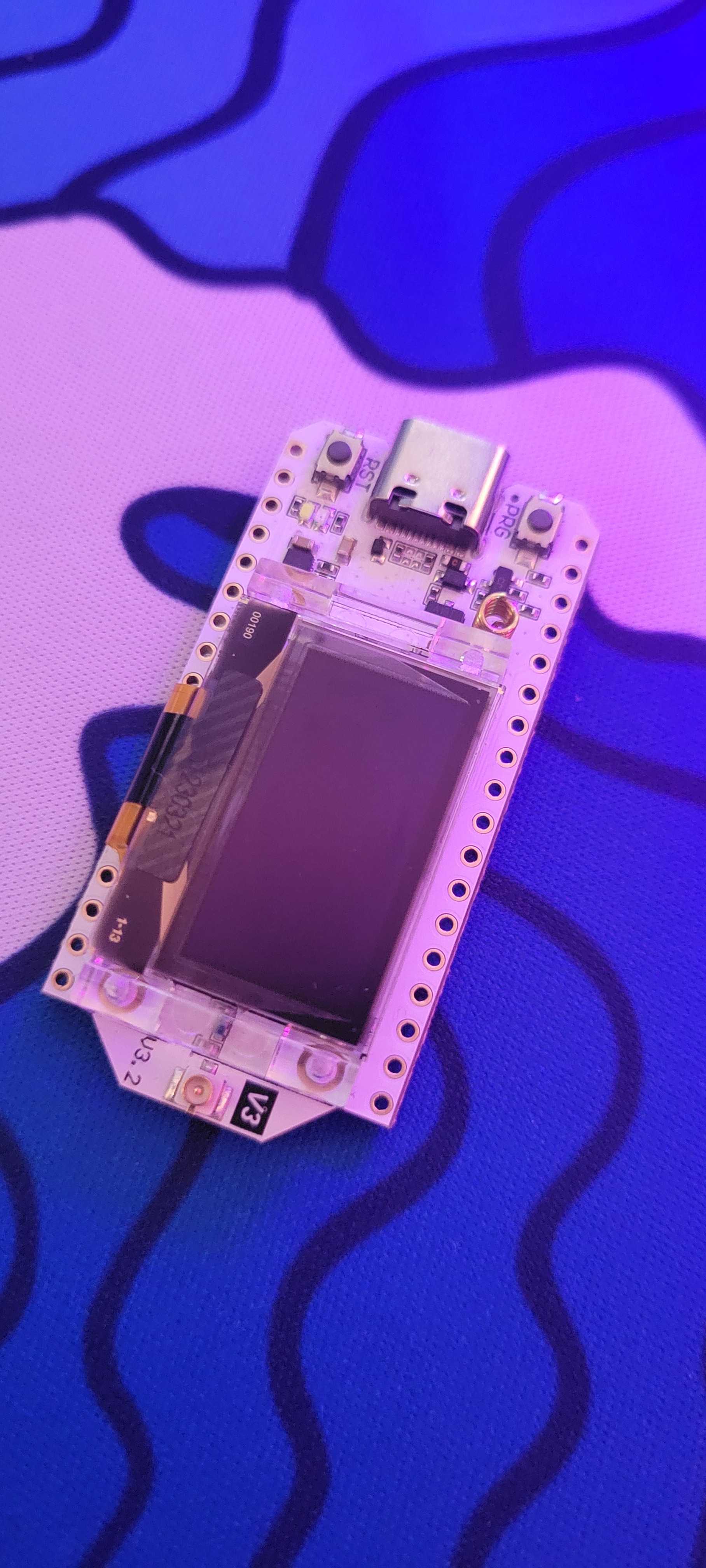
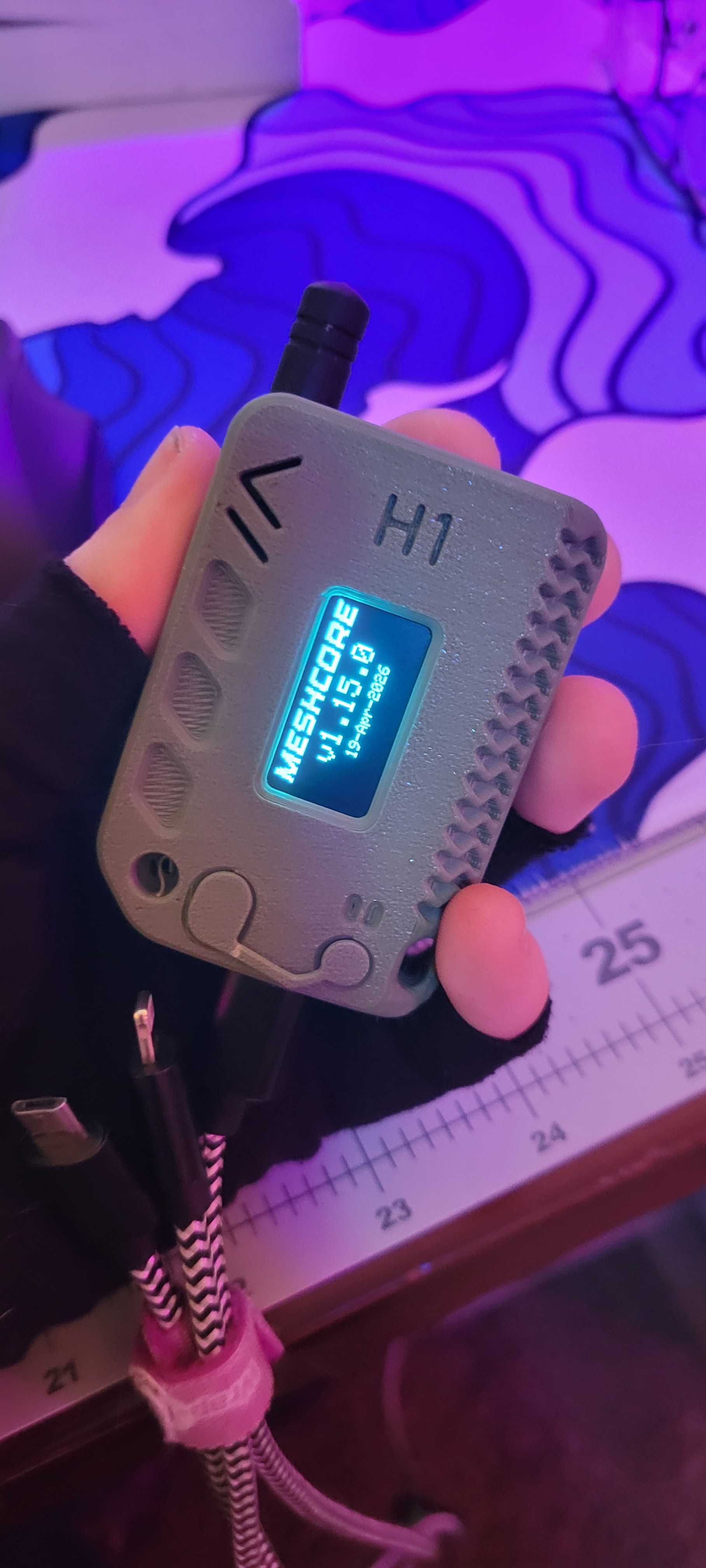
<p>The particular unit I put together works with essentially two components:</p>
<ul>
  <li>A <a href="https://heltec.org/project/wifi-lora-32-v3/">Heltec V3 ESP32 board with a LoRa compatible antenna</a></li>
  <li>An <a href="https://makerworld.com/en/models/160873-h1-case-for-heltec-v3-running-meshtastic">enclosure</a> for the board and antenna that was 3D printed using PLA filament</li>
</ul>

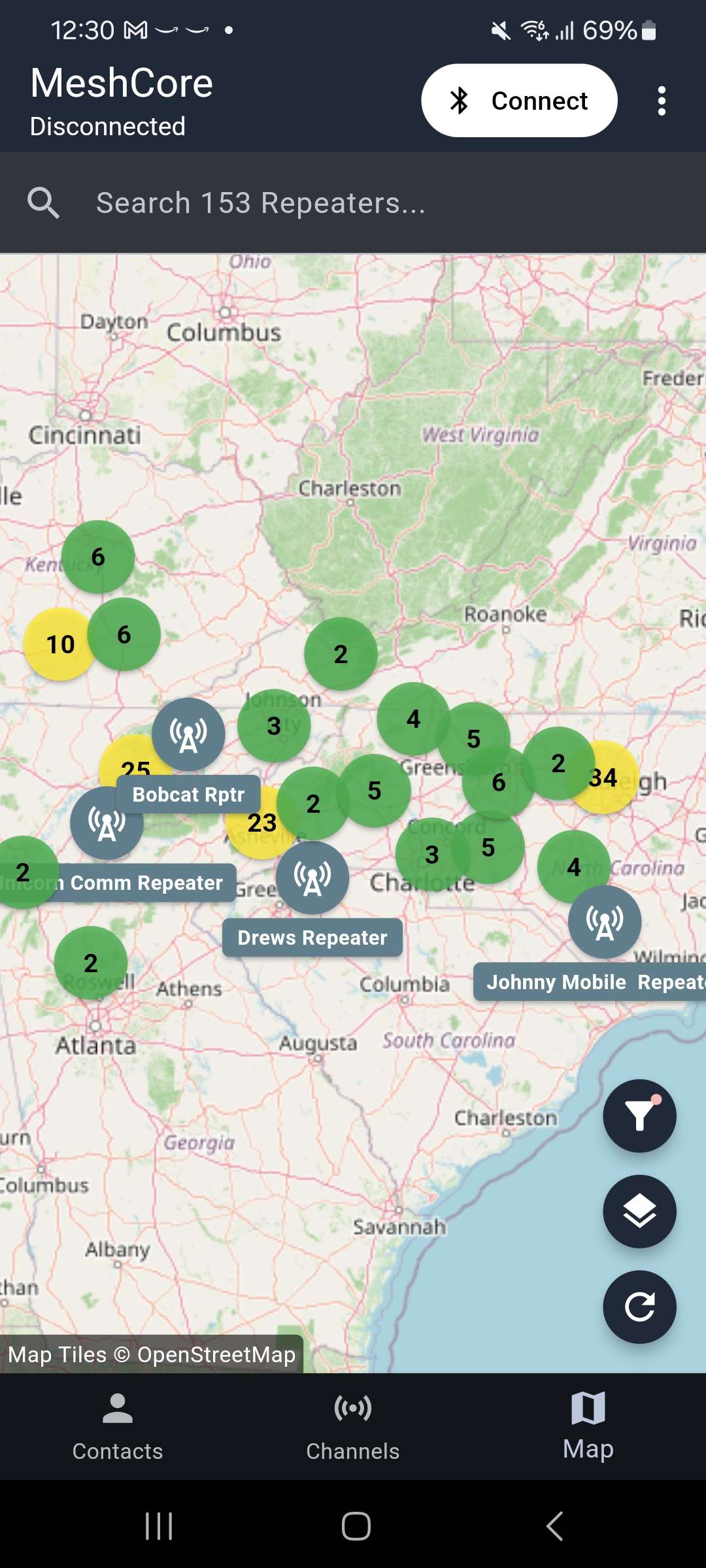
<p>From there, I searched for information about mesh users in my area. Thankfully, being in a city, there is already ample radio infrastructure near me that made it easy to go ahead and connect with other users. I joined <a href="https://ncmesh.net/">NC Mesh</a>, which is the mesh network group for my state, and I found that they tend to use <a href="https://meshcore.co.uk/">Meshcore</a> as their preferred mesh platform, so I flashed the firmware onto the Heltec board, downloaded the corresponding app onto my phone, and I sent my first ever transmission out into the ether.</p>

<p>My transmission made it to one repeater, and then another, and another. Suddenly, my device’s map populated with dozens of repeater nodes that were acting as a kind of telephone or notepassing system, “hopping” my message from one node to the next. No internet or data required. Passing my greeting to the mesh network through radio waves alone.</p>

<p><img src="/assets/images/posts/meshmap.jpg" alt="meshmap" height="300px" width="300px" /></p>

<p>Talk about a line of flight, indeed.</p>

<h2 id="a-new-plot-of-land-at-all-times">A new plot of land at all times</h2>
<p>This is the hope of this blog, to grapple with the problems that the kinds of experiments, unanswered questions, and unanticipated roadblocks that emerge in the process of producing scholarship, especially when that work is multimodal or involves critical making. Perhaps a blog post can be much like a radio message, transmitted without requiring or demanding that it being received, sending ideas out and waiting to see where the signal reaches. As I look at the many maker projects I have tucked in the makerspace room I have constructed in my apartment, I see possibilities for more posts, which may become presentations or publications, but also an assemblage of scholarly practice that can be constructed in this space over time.</p>

<blockquote>
  <p>blog post transmitting…</p>

  <p>…</p>

  <p>…</p>

  <p>…</p>

  <p>…over</p>
</blockquote>

<p><strong>References</strong></p>

<div class="footnotes" role="doc-endnotes">
  <ol>
    <li id="fn:1" role="doc-endnote">
      <p>Deleuze, G., &amp; Guattari, F. (1987). <em>A thousand plateus.</em> University of Minnesota Press. <a href="#fnref:1" class="reversefootnote" role="doc-backlink">&#8617;</a></p>
    </li>
    <li id="fn:2" role="doc-endnote">
      <p>Ratto, M. (2011). Critical making: Conceptual and material studies in technology and social life. <em>The Information Society, 27</em>(4), 252-260. <a href="#fnref:2" class="reversefootnote" role="doc-backlink">&#8617;</a></p>
    </li>
  </ol>
</div>]]></content><author><name>Haley M. Kinsler</name></author><category term="microcontroller" /><category term="LORA" /><category term="radio" /><category term="meshcore" /><category term="BwO" /><summary type="html"><![CDATA[Last week, I participated in my first ever graduate student writing retreat, where I sat in on a workshop session led by Luke LeGrand about the process of dissertation writing. From my perspective, while I have yet to publish or attend many conferences or even finalize my reading lists to prepare for exams, the thought of writing about research generally is at the top of my list of things to avoid in my daily life, let alone an entire dissertation. During that workshop, however, Luke shared that he started working on a blog to his advisors to share updates about his progress, ideas, and reflections on the journey so far. For whatever reason, that idea really resonated with me.]]></summary></entry></feed>